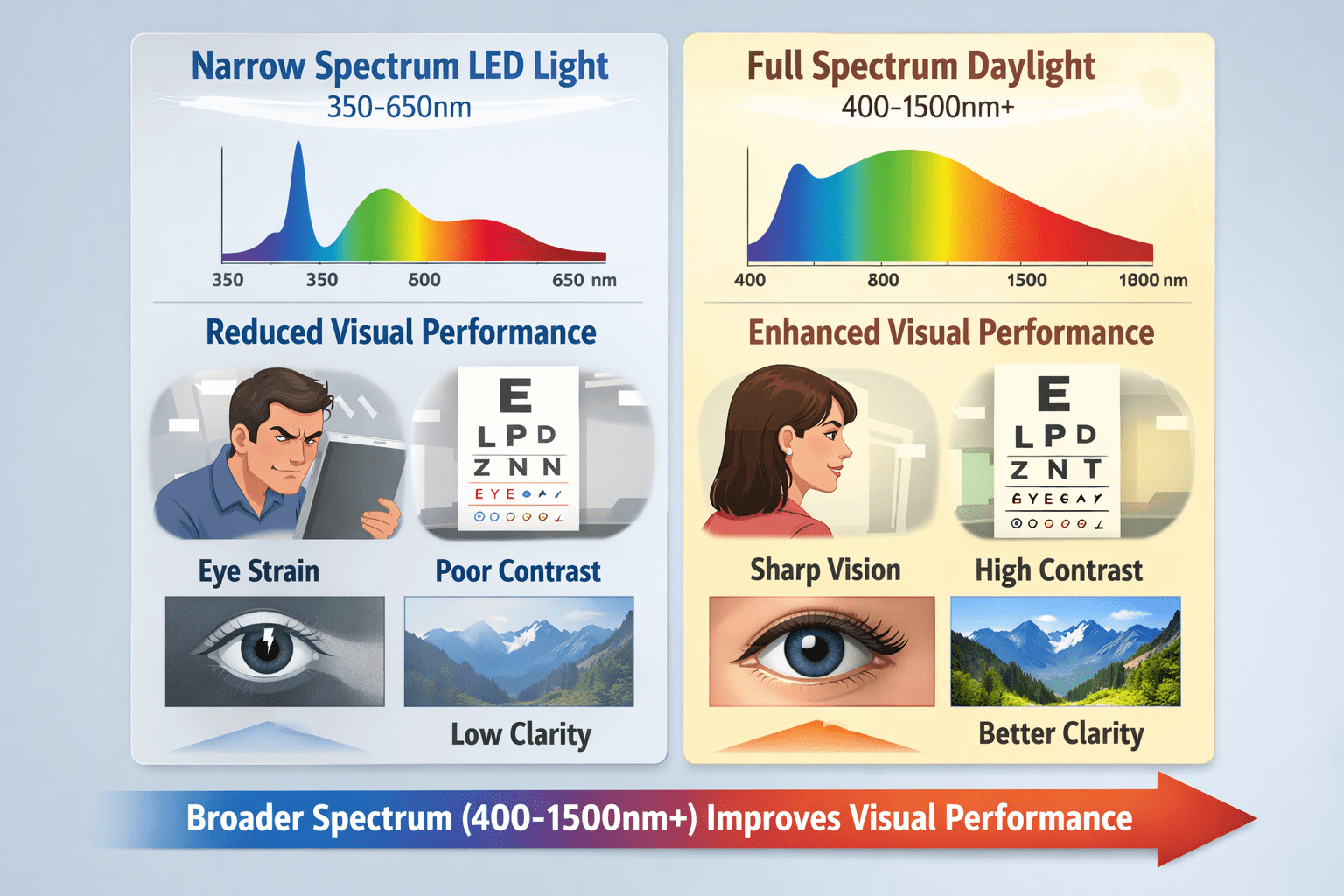
Absence of longer wavelengths in LEDs and their short wavelength dominance impacts physiology, undermining normal mitochondrial respiration that regulates metabolism, disease and ageing.
Mitochondria are light sensitive. The 420–450 nm dominant in LEDs suppresses respiration.
Deep red/infrared (670–900 nm) increases respiration in aging and some diseases including in blood sugar regulation.
“We have finally learned that light is a nutrient much like food, and like food, the wrong kind can make us ill and the right kind can help keep us well.” — Dr. John Ott
Science of Light is delighted to introduce patented Nutritional Light Technology.
“Each separate frequency or color of sunlight has nutritional value for cells.” — Dr. Jack Kruse, Neurosurgeion