
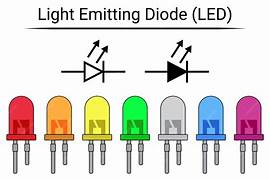
How LEDs Work
Today’s energy-efficient, LED technology consist of a blue LED (the energy pump) and fluorescent phosphors that cover the blue LED, transforming part of the blue light into longer wavelengths that create a yellowish light. The yellowish light combines together with the residual blue light to create white light. This process causes LEDs to emit an excessive amount of blue light.
Blue has the highest energy in the visible part of the spectrum. The repair and regenerative part of the spectrum is not found in the blue wavelengths..
LEDs lack the essential, counterbalancing healing and regenerative red and near-infrared light (NIR) frequencies. Blue wavelengths create ROS (Reactive Oxygen Species). ROS describes a number of reactive molecules and free radicals that have long been known to be a component of the killing response of immune cells to microbial invasion. When generated in excess, ROS can cause damage.
We don’t have this kind of light quality in nature.

When using common white and full-spectrum LEDs, you end up with increased damage and decreased repair and regeneration. We have increased stress from the blue short wavelength and we have reduced regeneration and repair from the lack of sufficient red and NIR long wavelengths. This has stress consequences in the retina associated with macular degeneration and it has adverse consequences in our endocrine system as well..
Insufficient deep red and the absence of NIR wavelengths means decreased repair & regeneration and increased cellular damage.
“LED light exposure that is not balanced with full (spectrum) sunlight loaded with the red parts of the spectrum is always damaging to your biology.” — Alexander Wunsch, MD, PhD, Photobiology Expert